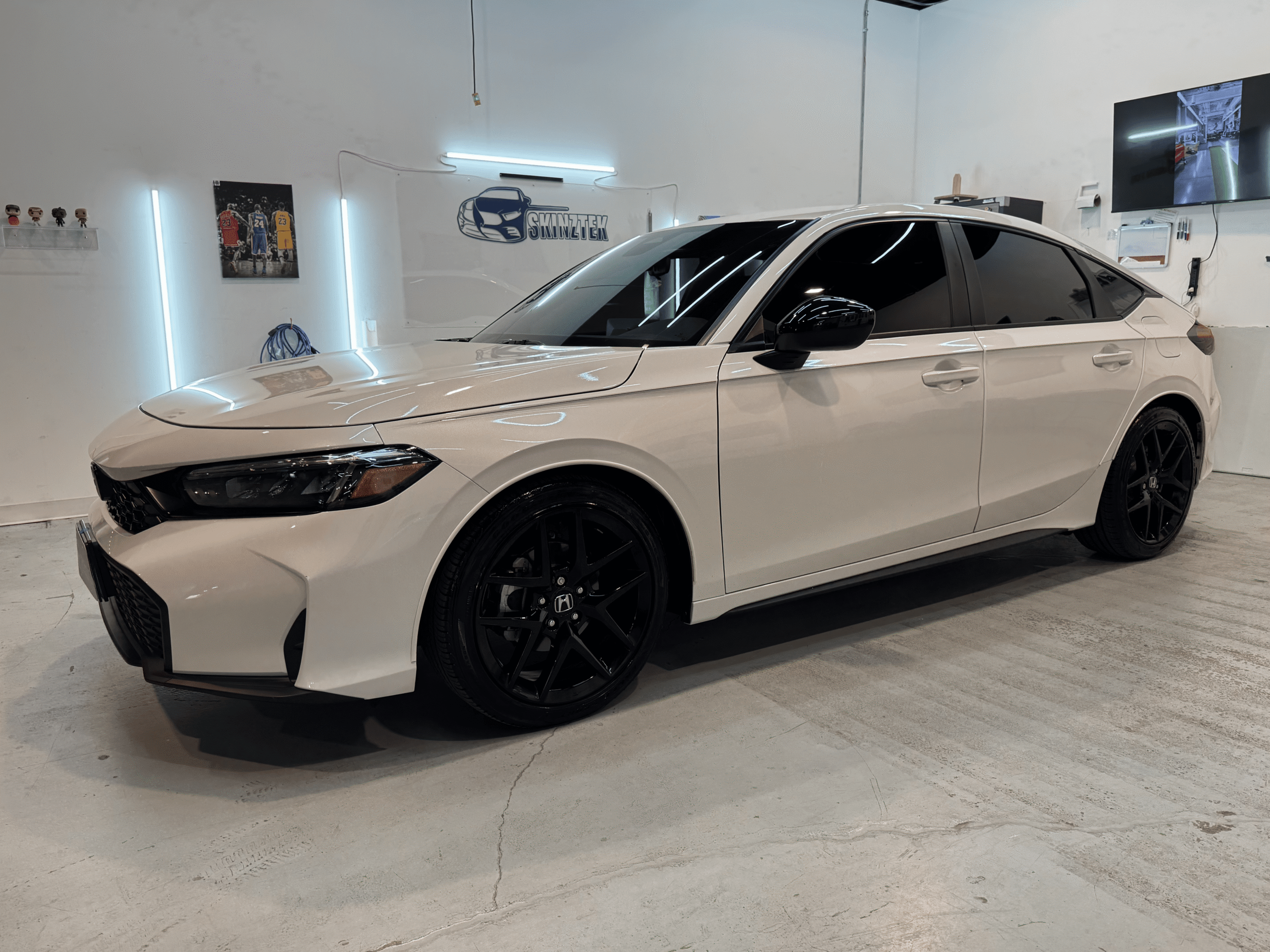
Window tint can make daytime driving noticeably more comfortable. It can help reduce glare, improve privacy, and give your vehicle a cleaner appearance.
But there is one question drivers often forget to ask until after the sun goes down:
Will my tint make it harder to see at night?
The answer depends heavily on the darkness of the film, where it is installed, the quality of the window film, and your own driving environment.
At SkinzTek, choosing window tint should not be about finding the darkest option possible. It should be about finding a film that works for how you actually use your vehicle during both the day and the night.
The Real Issue Is Available Light
During the daytime, there is plenty of light outside your vehicle.
At night, that changes.
Streetlights, headlights, illuminated signs, and nearby buildings may become your main sources of visibility. Because darker window tint allows less visible light through the glass, the difference can become more noticeable after sunset.
A tint that feels perfectly comfortable at noon may feel much darker when you are:
-
Backing out of a poorly lit driveway
-
Changing lanes on a dark road
-
Looking through side windows at an intersection
-
Parking in an underground garage
-
Driving through rural areas with little street lighting
That does not mean window tint automatically makes night driving difficult.
It means shade selection matters.
Darker Is Not Always Better
Many drivers initially approach tint by asking:
“What is the darkest tint I can get?”
A better question might be:
“What tint gives me the balance I want?”
The lower the VLT or Visible Light Transmission, the darker the film generally appears.
A very dark shade may provide the privacy and style someone wants during the day, but drivers should also consider how much nighttime driving they do.
Someone who mostly drives during daylight hours may have different preferences from someone who regularly commutes home after midnight.
Your window tint should fit your routine rather than simply following a trend.
Where the Tint Is Installed Matters Too
Not every window affects your view in the same way.
Your front side windows play an important role when checking traffic, making turns, or looking for pedestrians.
Rear windows affect visibility when backing up or checking behind the vehicle.
The windshield is especially important because it is your primary viewing area while driving.
This is why choosing tint should be considered as a complete vehicle setup, rather than treating every piece of glass exactly the same.
Our goal is to help customers choose window film that complements their vehicle while keeping their real driving habits in mind.
Film Quality Can Change the Experience
Darkness is not the only thing that matters.
Two films with similar tint percentages may not provide the exact same viewing experience.
Higher-quality automotive films are designed with optical clarity in mind. A clean, quality installation can help provide a more consistent view through the glass without unnecessary distortion or haziness.
That becomes especially valuable at night when your eyes are already working with less available light.
This is another reason choosing window tint based entirely on price can be misleading.
You are not simply purchasing darker windows.
You are looking through that film every time you drive.
What About Headlight Glare?
Night driving creates another challenge: bright headlights.
Oncoming headlights and vehicles behind you can produce uncomfortable glare, especially on busy roads.
Window film may help reduce some brightness through tinted glass, but that does not mean extremely dark tint is automatically the solution.
Too much darkness can create its own visibility challenges.
The goal should be comfortable visibility, not simply maximum darkness.
A professionally selected film can help you find a better balance between daytime comfort, privacy, appearance, and nighttime usability.
Take the “Night Drive” Approach Before Choosing
Before selecting your tint percentage, picture your normal week.
Do you leave work after dark?
Do you regularly drive in areas with limited streetlights?
Do you park in dark garages?
Are most of your drives during daylight?
Do you prioritize privacy, heat rejection, appearance, or a combination of all three?
These questions can tell you more about the right film than simply looking at somebody else’s tinted vehicle.
What works perfectly for one driver may feel too dark or too light for another.
You Do Not Always Need Extremely Dark Tint for Better Performance
One misconception is that darker automatically means better window film.
Modern window film technology can offer benefits such as heat rejection and UV protection without requiring the darkest shade available.
That gives drivers more flexibility.
You can choose a tint that supports comfort and protection while still keeping nighttime visibility in mind.
At SkinzTek, we believe this is one of the most important parts of choosing window tint: understanding what you actually want the film to accomplish.
SkinzTek Helps You Find the Right Balance
Window tint should make your vehicle more enjoyable to drive, not leave you questioning your choice every time the sun goes down.
At SkinzTek, we help drivers look beyond tint percentage and consider the complete experience, including appearance, privacy, daytime comfort, film quality, and nighttime driving.
The darkest option is not automatically the best option.
The best tint is the one that makes sense when you drive.
If you are unsure which shade fits your vehicle and lifestyle, talk with SkinzTek before making your decision.
📍 Visit SkinzTek in Chicago
📞 Call or text to book your appointment
📩 Request a free quote online
SkinzTek — Tint for the Way You Drive, Day or Night.